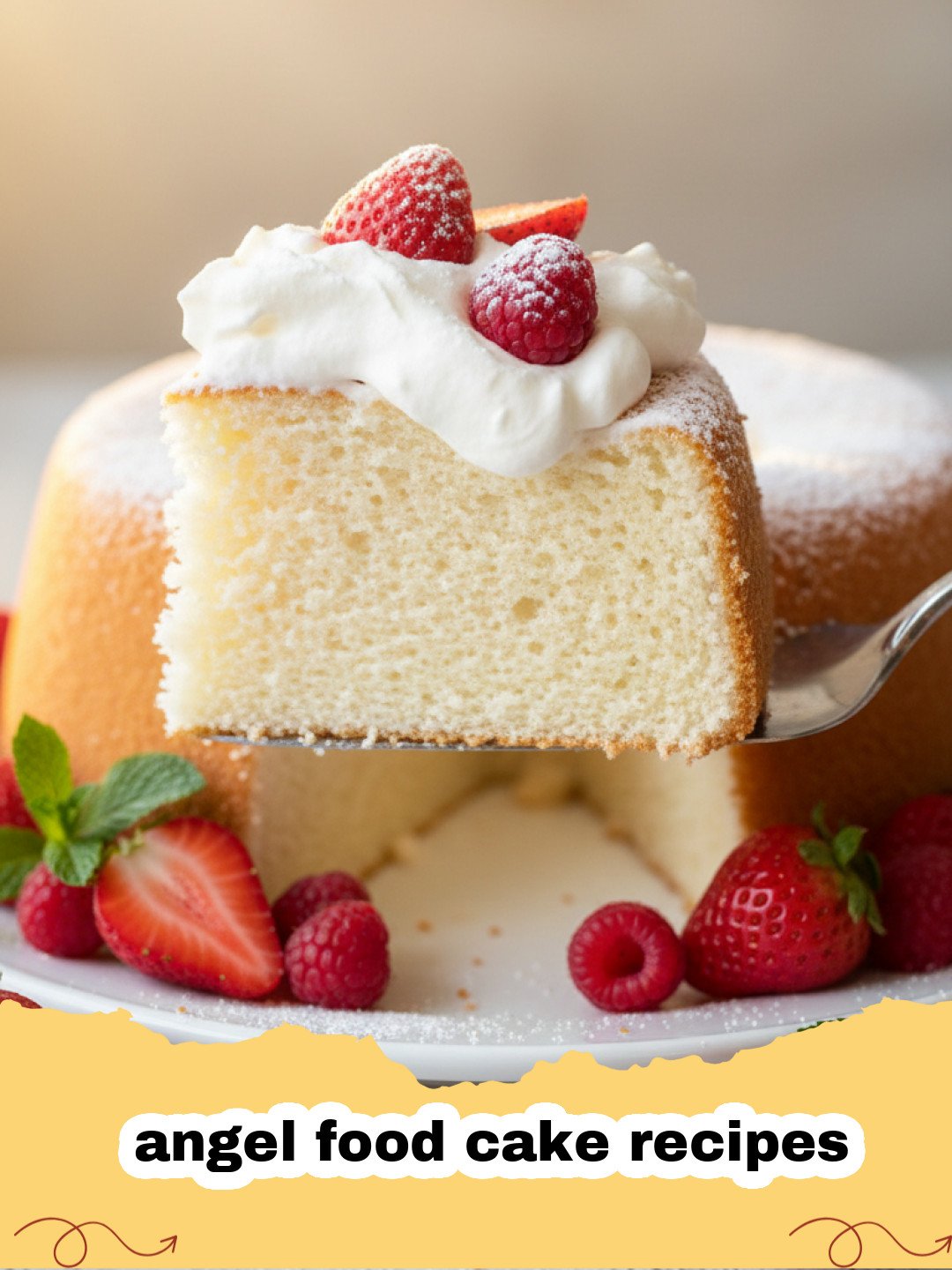
Growing up, my grandmother’s kitchen was a sanctuary of sweet aromas and even sweeter memories. Among her many specialties, her angel food cake stood out as a beacon of pure, ethereal delight. It wasn't just a cake; it was an event. The delicate aroma of vanilla filling the air, the rhythmic whir of her ancient mixer transforming egg whites into billowy clouds, and the hushed reverence as she gently folded in the dry ingredients – these are the moments etched in my culinary memory. Many angel food cake recipes promise perfection, but grandma's secret, beyond her loving touch, was patience and precision. She taught me that making angel food cake isn't just baking; it's a dance, a delicate art form that, when mastered, yields a dessert unlike any other. It’s a cake that speaks of simplicity, elegance, and pure, unadulterated joy. Today, I'm thrilled to share her timeless techniques and this classic angel food cake recipe, ensuring you too can create a piece of heaven right in your own kitchen.
For me, the true magic of this cake lies in its ability to be both simple and profoundly satisfying. It’s naturally fat-free, making it a lighter indulgence, yet its towering height and cloud-like texture make it feel utterly luxurious. Forget dense, heavy desserts; we’re aiming for a cake that feels like biting into a sweet, vanilla-scented cloud. This particular angel food cake recipe has been perfected over generations, yielding consistent results every single time. It’s perfect for summer gatherings, holiday meals, or simply a quiet afternoon treat with a cup of tea. If you've ever been intimidated by the thought of making angel food cake from scratch, fear not! I’m here to guide you through every whisk and fold, turning what might seem like a daunting task into a delightful baking experience.
Why This Angel Food Cake Recipe is a Must-Try
- Unmatched Lightness: This recipe delivers an incredibly airy, cloud-like texture that melts in your mouth, a hallmark of excellent angel food cake recipes.
- Naturally Fat-Free: Made primarily from egg whites, it's a delightful dessert that feels indulgent without the heavy fat content of many other cakes.
- Versatile Pairing: Its subtle sweetness makes it a perfect canvas for fresh berries, fruit compotes, chocolate sauce, or a simple dusting of powdered sugar.
- Impressive Presentation: A tall, perfectly golden angel food cake always makes a stunning centerpiece, sure to impress your guests.
Key Ingredient Notes for Perfect Angel Food Cake Recipes
While angel food cake recipes often have a short ingredient list, the quality and preparation of each component are crucial for success. Here’s what you need to know about the stars of our show:
Egg Whites
These are the heart and soul of your angel food cake. Use large, fresh egg whites, preferably from eggs that are a few days old (they separate more easily). Most importantly, ensure they are at room temperature. Cold egg whites won't whip to their maximum volume, which is essential for that signature airy texture. Separation is key: be meticulously careful not to get even a speck of yolk into the whites, as fat will prevent them from whipping properly. If you're separating a lot of eggs, consider using a three-bowl method: separate each egg into a small bowl, then transfer the white to a larger mixing bowl. This way, if you accidentally get yolk in one, you only lose that single egg white. You can save the yolks for another recipe, perhaps for a rich custard or a hollandaise sauce! For optimal freshness, if you buy large cartons of egg whites, make sure they are stored correctly, maybe in something like Basics Glass Food Storage containers.
Cake Flour
Unlike all-purpose flour, cake flour has a lower protein content, which results in a finer, softer crumb, crucial for the delicate texture of angel food cake recipes. Do not substitute all-purpose flour unless absolutely necessary, and if you do, remove two tablespoons of flour for every cup and replace with two tablespoons of cornstarch to mimic the lower protein content. Sifting the cake flour (and sugar) multiple times is non-negotiable. This aeration prevents lumps and ensures the dry ingredients are evenly distributed and light enough to be gently folded into the delicate meringue without deflating it. This step is a cornerstone of light and fluffy angel food cake recipes.
Cream of Tartar
This humble acidic powder is your meringue's best friend. Cream of tartar stabilizes the egg whites, helping them whip up to their full potential and maintain their volume. It also contributes to the cake's white color and fine texture. Don't skip it! It's a small but mighty ingredient that makes a significant difference in the structure and stability of your angel food cake.
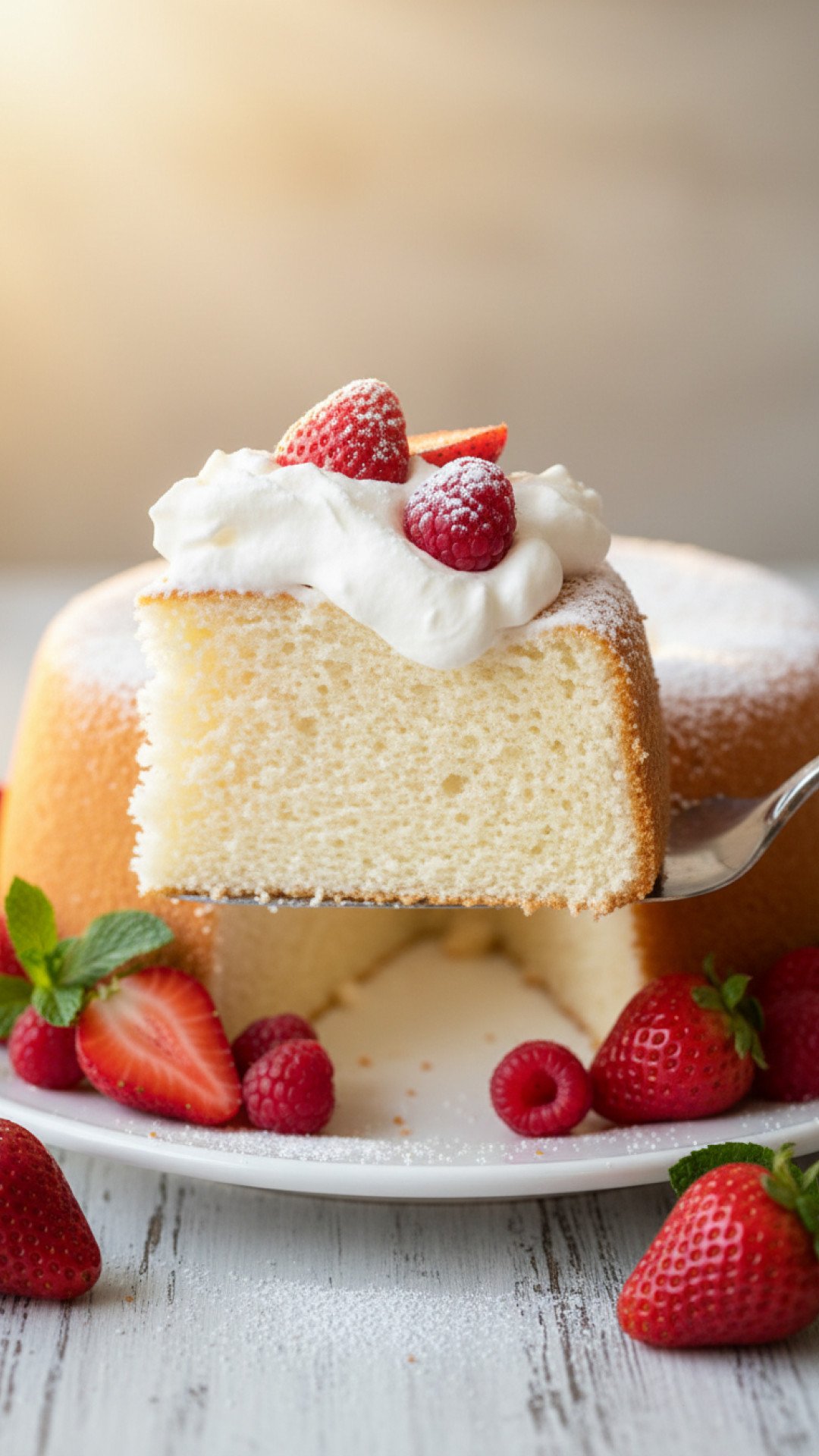
Step-by-Step Guide with Pro Tips for Angel Food Cake Recipes
Mastering this classic angel food cake recipe is all about technique. Follow these steps carefully, and you’ll be rewarded with a cake that’s nothing short of divine.
Equipment Needed:
- Large mixing bowl (preferably metal or glass, completely clean and grease-free)
- Electric mixer (stand mixer with whisk attachment or hand mixer)
- Fine-mesh sieve
- 10-inch tube pan (angel food cake pan) with a removable bottom, NOT greased
- Rubber spatula
Preparation is Key
- Before you even think about cracking eggs, ensure your tube pan is scrupulously clean and dry. Crucially, do NOT grease the pan. Angel food cake batter needs to cling to the sides of the pan to climb and rise properly.
- Preheat your oven to 350°F (175°C) with the rack in the lower-middle position. This ensures even baking and prevents the top from browning too quickly.
- Sift your cake flour and half of the granulated sugar together at least two to three times. This process aerates the dry ingredients and makes them incredibly fine, which is vital for a tender crumb. Set aside.
Now, let's get to the core of making one of the best angel food cake recipes:
The Process:
Whipping the Egg Whites
Step 1: In your large, impeccably clean mixing bowl, combine the room-temperature egg whites and cream of tartar. Using an electric mixer, start on medium-low speed until the whites are foamy. This initial slow whisking helps create small, uniform bubbles, leading to a more stable meringue.
Step 2: Increase the mixer speed to medium-high. Gradually add the remaining granulated sugar, about a tablespoon at a time, allowing each addition to dissolve slightly before adding the next. This slow addition is vital; it builds a strong, stable meringue. Continue whipping until you achieve stiff, glossy peaks. When you lift the whisk, the peaks should hold their shape firmly, and the meringue should look smooth and shiny, not dry or curdled. This is the foundation of all great angel food cake recipes!
Folding in Dry Ingredients
Step 3: This is where the gentle touch comes in. Remove the bowl from the mixer. Sprinkle about a third of your sifted flour-sugar mixture over the meringue. Using a large rubber spatula, gently fold the dry ingredients into the meringue. Use an upward motion, turning the bowl as you fold, being careful not to deflate the air you’ve worked so hard to incorporate. Repeat with the remaining flour mixture in two more additions, folding just until no streaks of flour remain. Overmixing here is the biggest mistake you can make; it will lead to a dense, tough cake.
Baking and Cooling
Step 4: Gently spoon the batter into your ungreased tube pan. Use the spatula to smooth the top. If your pan has "feet" or a stand, invert it onto a bottle or on its feet immediately after removing it from the oven. This prevents the cake from collapsing on itself as it cools, maintaining its impressive height and delicate structure. Angel food cake recipes emphasize this step as crucial for success.
Step 5: Bake for 40-45 minutes, or until the cake is golden brown, springs back when lightly touched, and a wooden skewer inserted into the center comes out clean. Be patient; underbaking can lead to a sticky, sunken cake. After baking, invert the pan immediately. Let it cool completely upside down for at least 1.5 to 2 hours. This gradual cooling is essential for setting the cake's structure. You don't want a deflated cake after all your effort!
Unmolding and Serving
Step 6: Once completely cool, run a thin knife or offset spatula around the edges of the pan and around the inner tube to release the cake. Carefully push the bottom up, then run the knife along the bottom to release the cake fully. Place it on a serving plate. Slice with a serrated knife using a gentle sawing motion, or better yet, use two forks to gently pull apart individual servings, which helps preserve its delicate texture.
Variations & Serving Suggestions for Angel Food Cake Recipes
While the classic angel food cake is magnificent on its own, it also provides a wonderful canvas for creative additions and pairings. Here are some ideas to elevate your angel food cake recipes:
- Berry Bliss: The simplest and often the best pairing is fresh mixed berries (strawberries, blueberries, raspberries) with a dollop of freshly whipped cream. The tartness of the berries complements the cake's sweetness beautifully.
- Lemon Zest: Add 1-2 teaspoons of finely grated lemon zest to the egg whites along with the cream of tartar for a bright, citrusy note that enhances the cake's refreshing quality.
- Chocolate Drizzle: A warm ganache or a simple melted chocolate drizzle can add a touch of decadence.
- Fruit Compote: Serve slices with a homemade fruit compote (cherry, peach, or apricot) for a more sophisticated dessert. These are often easy to make, and complement many angel food cake recipes.
- Tropical Twist: Top with diced mango, passion fruit pulp, and a sprinkle of toasted coconut flakes for an exotic flavor profile.
- Matcha Magic: For a unique twist, consider dusting your cake with a fine layer of matcha powder, or even infusing a small amount of matcha into the flour mixture for a subtle green tea flavor. This pairs wonderfully with the light texture, much like our Ultimate Matcha Recipe provides a unique beverage experience.
- Ice Cream Sandwich: Cut thick slices, spread with your favorite ice cream, and gently press two slices together for a summery treat.
Nutrition Information
| Nutrition Facts (per serving) | |
|---|---|
| Calories | 160 kcal |
| Carbohydrates | 35 g |
| Cholesterol | 0 mg |
| Fat | 0.5 g |
| Fiber | 0 g |
| Protein | 4 g |
| Saturated Fat | 0 g |
| Serving Size | 1/16 of cake |
| Sodium | 70 mg |
| Sugar | 25 g |
| Trans Fat | 0 g |
| Unsaturated Fat | 0.5 g |
Conclusion
Baking this classic angel food cake recipe is more than just following steps; it’s about creating something beautiful and delicious, a true testament to the simple elegance of baking. With its cloud-like texture and delicate flavor, it’s a dessert that never fails to bring a smile. From my grandmother’s kitchen to yours, I hope this guide helps you achieve the lightest, most ethereal angel food cake you’ve ever tasted. Remember, practice makes perfect, and every attempt at these angel food cake recipes brings you closer to mastering this delightful treat. Share it with loved ones, and create your own sweet memories. For more delightful baking adventures, be sure to check out our Ultimate Chewy Brookies Recipe for another fantastic dessert!
FAQs
What is the secret to a tall and fluffy angel food cake?
The secret lies in several key factors: using room-temperature egg whites for maximum volume, ensuring your mixing bowl and pan are completely grease-free, gradually adding sugar to the egg whites to create a stable meringue, and gently folding in the dry ingredients to avoid deflating the air. Also, cooling the cake upside down is crucial to prevent it from collapsing.
Can I use all-purpose flour instead of cake flour for angel food cake recipes?
While cake flour is highly recommended for its lower protein content, which yields a tender crumb, you can make a substitute for every cup of all-purpose flour. Remove two tablespoons of all-purpose flour and replace them with two tablespoons of cornstarch. Sift this mixture several times to ensure it's well combined and airy.
Why do I need to cool angel food cake upside down?
Cooling angel food cake upside down is essential to prevent it from collapsing under its own weight. The delicate structure of the cake is still setting as it cools, and gravity would cause it to compact if cooled right-side up. Inverting it allows the cake to stretch and set in its expanded, airy form, maintaining its impressive height and light texture.
How should I store leftover angel food cake?
Store leftover angel food cake in an airtight container at room temperature for up to 2-3 days. If you've topped it with fresh fruit or whipped cream, it's best to store it in the refrigerator and consume within 1-2 days. Angel food cake also freezes well; wrap slices tightly in plastic wrap and then foil, and freeze for up to a month. Thaw at room temperature before serving.
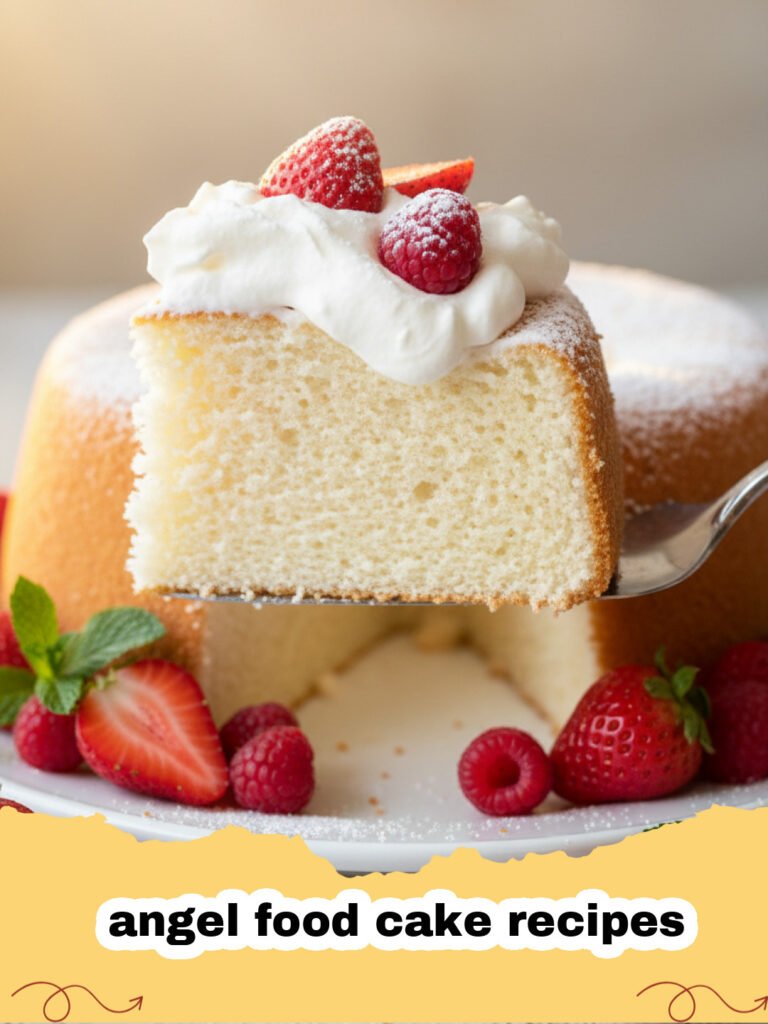
Classic Light and Fluffy Angel Food Cake
A timeless angel food cake recipe yielding a gloriously tall, incredibly light, and airy cake with a delicate vanilla flavor. Perfect for any occasion, especially when topped with fresh berries or a light glaze. This classic, naturally fat-free dessert is a true crowd-pleaser.
- Total Time: 1 hour 15 minutes
- Yield: 12-16 servings 1x
Ingredients
12 large egg whites (about 1 1/2 cups), at room temperature
1 1/2 teaspoons cream of tartar
1 1/4 cups granulated sugar, divided
1 cup cake flour, sifted
1 teaspoon vanilla extract
1/4 teaspoon salt
Instructions
Step 1: Preheat your oven to 350°F (175°C) with the oven rack in the lower-middle position. Ensure your 10-inch tube pan (angel food cake pan) is clean, dry, and ungreased. Do not grease the pan.
Step 2: In a medium bowl, sift the cake flour and 1/2 cup of the granulated sugar together at least twice. Set aside. This step is crucial for an airy texture.
Step 3: In a large, impeccably clean mixing bowl (preferably metal or glass), combine the room-temperature egg whites, cream of tartar, and salt. Beat with an electric mixer on medium-low speed until the mixture is foamy and soft peaks begin to form.
Step 4: Gradually increase the mixer speed to medium-high. Slowly add the remaining 3/4 cup of granulated sugar, about 1 tablespoon at a time, allowing each addition to incorporate before adding the next. Continue beating until the meringue forms stiff, glossy peaks. The meringue should be smooth and shiny, not dry. Gently fold in the vanilla extract.
Step 5: Remove the bowl from the mixer. Sprinkle about one-third of the sifted flour-sugar mixture over the meringue. Using a large rubber spatula, gently fold the dry ingredients into the meringue using an upward motion, turning the bowl as you fold. Be careful not to deflate the air.
Step 6: Repeat with the remaining flour-sugar mixture in two more additions, folding just until no streaks of flour remain. Do not overmix, as this will lead to a dense cake.
Step 7: Gently spoon the batter into the ungreased tube pan, spreading it evenly with your spatula. Gently tap the pan on the counter a couple of times to release any large air bubbles.
Step 8: Bake for 40-45 minutes, or until the cake is golden brown, springs back when lightly touched, and a wooden skewer inserted into the center comes out clean.
Step 9: Immediately invert the pan onto its "feet" (if it has them) or onto the neck of a bottle (like a wine bottle). Let the cake cool completely upside down for at least 1.5 to 2 hours. This prevents the cake from collapsing and maintains its height.
Step 10: Once completely cool, use a thin knife or offset spatula to carefully loosen the cake from the outer edge of the pan and around the inner tube. Gently push the bottom up, then run the knife along the bottom to release the cake fully. Transfer to a serving plate.
Step 11: Slice with a serrated knife or use two forks to gently pull apart servings. Serve plain, with fresh berries, whipped cream, or your favorite fruit compote.
Notes
Always use a clean, ungreased tube pan for angel food cake. Any grease can prevent the batter from clinging to the sides and rising properly. Ensure egg whites are at room temperature for maximum volume. For best results, measure ingredients by weight.
- Prep Time: 30 minutes
- Cook Time: 40-45 minutes
- Category: Desserts & Baking
- Cuisine: American
Nutrition
- Serving Size: 1/16 of cake
- Calories: 160 kcal
- Sugar: 25 g
- Sodium: 70 mg
- Fat: 0.5 g
- Saturated Fat: 0 g
- Unsaturated Fat: 0.5 g
- Trans Fat: 0 g
- Carbohydrates: 35 g
- Fiber: 0 g
- Protein: 4 g
- Cholesterol: 0 mg