
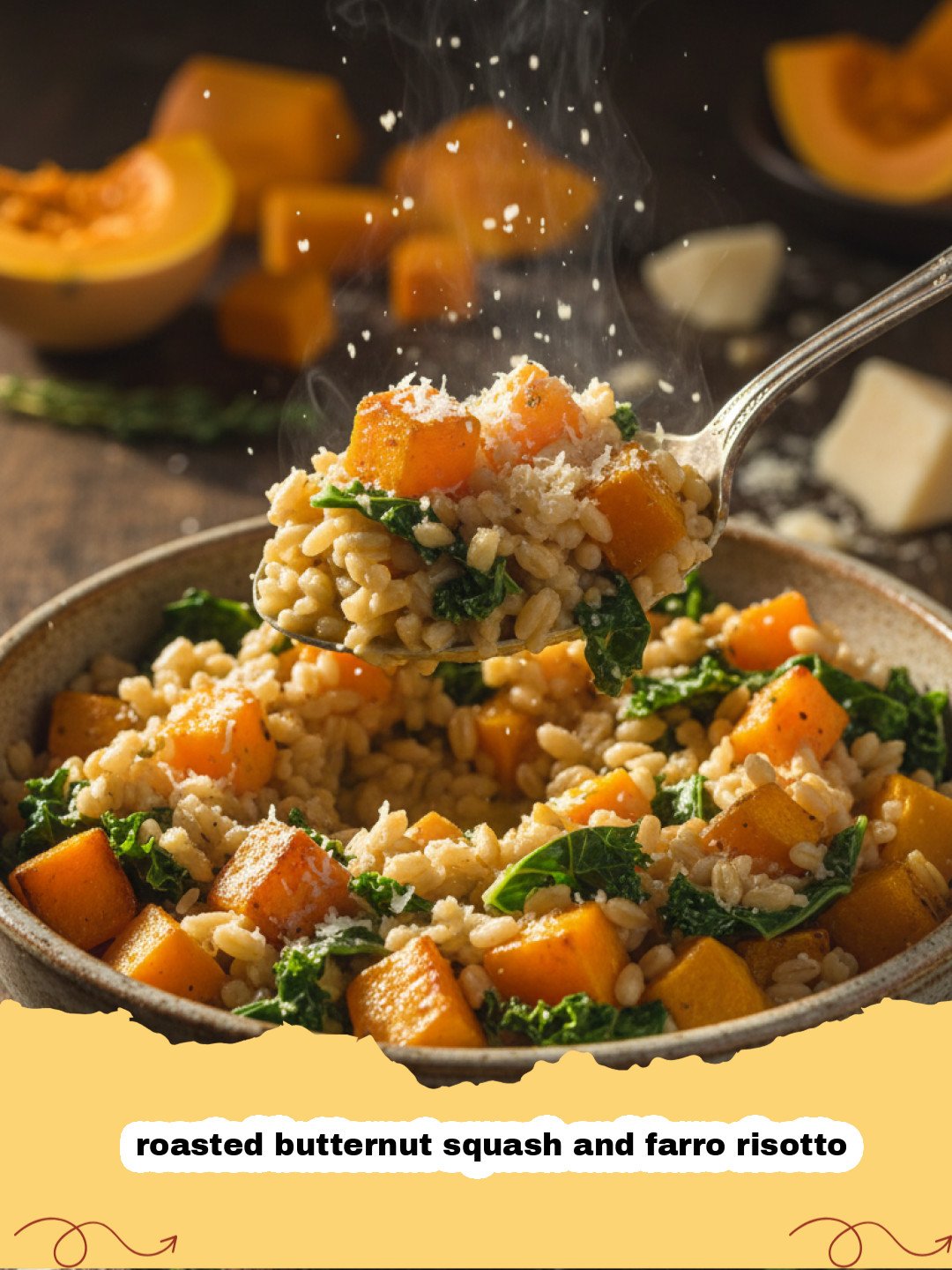
Roasted butternut squash and farro risotto is the ultimate comfort food for a chilly evening when you crave something that warms you from the inside out. My journey with this recipe began on a particularly crisp October afternoon when the leaves were just beginning to turn their brilliant shades of amber and gold. I was wandering through the local farmers' market, and the sight of those perfectly shaped butternut squashes, with their matte beige skins hiding a vibrant orange interior, inspired me. I had grown a bit tired of traditional rice-based risottos and wanted something with more bite, more character, and more nutritional value. That is when I remembered the jar of pearled farro sitting in my pantry. Combining the sweetness of caramelized squash with the nutty, chewy texture of farro was an experiment that changed my autumn cooking routine forever. This roasted butternut squash and farro risotto isn't just a meal; it’s a celebration of the season's bounty, providing a satisfying depth that keeps you coming back for a second bowl. Whether you are hosting a cozy dinner party or simply looking for a wholesome weeknight dinner, this roasted butternut squash and farro risotto offers a sophisticated yet accessible experience that bridges the gap between rustic charm and gourmet elegance.
Why This Recipe is a Must-Try
- Nutritional Powerhouse: Unlike traditional white Arborio rice, farro is an ancient grain packed with fiber, protein, and essential minerals, making this roasted butternut squash and farro risotto a much heartier and healthier alternative.
- Complex Texture: The juxtaposition of the creamy, almost melt-in-your-mouth roasted squash against the firm, chewy farro creates a sensory experience that standard risottos simply cannot match.
- Natural Sweetness and Depth: Roasting the squash before adding it to the grain concentrates its natural sugars, providing a rich, caramelized flavor profile that permeates every bite of the roasted butternut squash and farro risotto.
- Excellent for Meal Prep: This dish holds up remarkably well in the fridge, and many actually find that the flavors of the roasted butternut squash and farro risotto deepen and improve the next day.
Key Ingredient Notes
When making a top-tier roasted butternut squash and farro risotto, the quality of your ingredients is paramount. First, let's talk about the farro. You will typically find three types in the store: whole, semi-pearled, and pearled. For this roasted butternut squash and farro risotto, I highly recommend pearled or semi-pearled farro. Pearled farro has had the bran removed, allowing it to cook faster and absorb the savory broth more effectively, mimicking the starchy creaminess we love in a risotto without the need for constant, frantic stirring. If you have extra farro, you might also enjoy making The Ultimate Apple Butternut Squash and Farro Salad Recipe for a lighter, refreshing lunch.
The second star is, of course, the butternut squash. Choose a squash that feels heavy for its size and has a thick neck; this usually means it has more flesh and fewer seeds. When preparing it for your roasted butternut squash and farro risotto, ensure you cut the cubes into uniform 1/2-inch sizes. This ensures they caramelize evenly in the oven. The Maillard reaction—that beautiful browning on the edges—is what provides the deep, smoky sweetness that defines this dish.
Finally, do not overlook the importance of the broth. Since the farro will absorb a significant amount of liquid, using a high-quality vegetable or chicken stock is essential. If you have time to make a homemade stock with scraps of onion, carrot, and celery, your roasted butternut squash and farro risotto will reach a professional chef level of flavor. To start your meal with a similar flavor profile, consider serving a small bowl of Creamy Pumpkin and White Bean Soup with Sage as an appetizer.
Step-by-Step Guide with Pro Tips
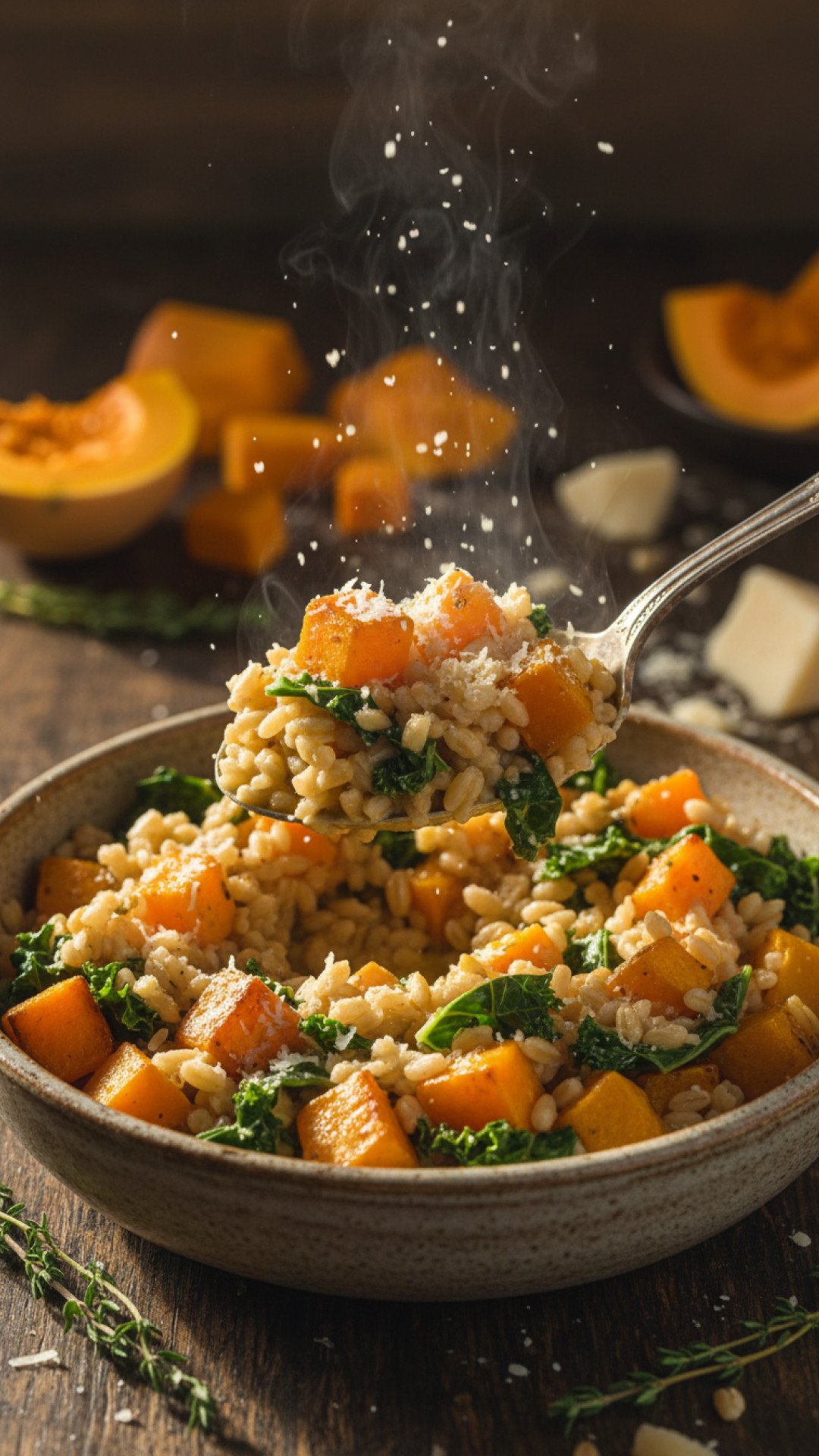
Creating the perfect roasted butternut squash and farro risotto requires a bit of patience, but the process is far more forgiving than traditional risotto. The first phase is roasting. You want to toss your squash cubes with olive oil, salt, and perhaps a pinch of cinnamon or nutmeg to highlight the squash's natural sweetness. Roast them at a high temperature (400°F) until they are tender and the edges are slightly charred. This charring is a secret weapon in the roasted butternut squash and farro risotto flavor profile.
While the squash is roasting, you can begin the farro base. Sauté finely diced shallots and garlic in a heavy-bottomed pot or Dutch oven. Once they are translucent and fragrant, add the dry farro. Toasting the farro for two to three minutes until it smells slightly nutty is a crucial step that enhances the overall aroma of the roasted butternut squash and farro risotto. Deglaze the pan with a splash of dry white wine, like a Sauvignon Blanc or Pinot Grigio, scraping up any browned bits from the bottom.
Now, the liquid addition begins. Unlike rice risotto, you don't need to add the stock one tablespoon at a time. Adding it in three or four large batches works beautifully for farro. Allow the liquid to simmer gently, stirring occasionally. As the farro cooks, it releases just enough starch to create a silky sauce. Once the farro is al dente, stir in half of the roasted squash, mashing some of it slightly to thicken the sauce. Fold in the remaining whole cubes at the end to maintain texture. Finish your roasted butternut squash and farro risotto with a generous handful of freshly grated Parmesan cheese and a squeeze of lemon juice to brighten the flavors.
Variations & Serving Suggestions
This roasted butternut squash and farro risotto is incredibly versatile. For a vegan version, simply omit the Parmesan and use a tablespoon of nutritional yeast or a high-quality vegan butter substitute. If you want to add more greens, stirring in a few handfuls of baby spinach or chopped kale during the last five minutes of cooking adds a lovely color and a boost of iron to the roasted butternut squash and farro risotto. For an extra crunch, top each serving with toasted pumpkin seeds (pepitas) or crushed walnuts.
If you find yourself with leftovers, this dish stores beautifully. I recommend using Basics Glass Food Storage to keep the roasted butternut squash and farro risotto fresh in the refrigerator for up to four days. To reheat, simply add a splash of water or broth to loosen the grains and microwave or heat on the stovetop until steaming.
Nutrition Information
| Nutrient | Amount per Serving |
|---|---|
| Calories | 385 kcal |
| Carbohydrate Content | 62g |
| Cholesterol Content | 15mg |
| Fat Content | 11g |
| Fiber Content | 9g |
| Protein Content | 12g |
| Saturated Fat Content | 4g |
| Serving Size | 1.5 cups |
| Sodium Content | 540mg |
| Sugar Content | 6g |
| Trans Fat Content | 0g |
| Unsaturated Fat Content | 6g |
Conclusion
Mastering the roasted butternut squash and farro risotto is a rewarding endeavor that brings a touch of rustic luxury to your dining table. This dish embodies everything we love about autumn: warmth, richness, and wholesome ingredients. I hope this roasted butternut squash and farro risotto becomes as much of a favorite in your household as it has in mine. Don't be afraid to experiment with different herbs or cheeses to make it your own. Happy cooking, and may your kitchen always be filled with the wonderful aroma of roasting squash!
FAQs
Can I use frozen butternut squash for this risotto?
Yes, you can use frozen cubed butternut squash. Roast it directly from frozen, though it may take a few extra minutes to caramelize properly. The flavor will still be excellent in the roasted butternut squash and farro risotto.
Is farro gluten-free?
No, farro is a type of wheat and contains gluten. If you need a gluten-free alternative for this roasted butternut squash and farro risotto, you can substitute the farro with brown rice or sorghum, though cooking times will vary.
How do I store and reheat leftovers?
Store leftovers in an airtight container in the fridge for up to 4 days. Reheat on the stovetop with a splash of broth or water to restore the creamy consistency of the roasted butternut squash and farro risotto.
Do I really need to toast the farro?
While not strictly mandatory, toasting the farro adds a significant layer of nutty flavor and helps the grains maintain their structure during the long simmering process of the roasted butternut squash and farro risotto.
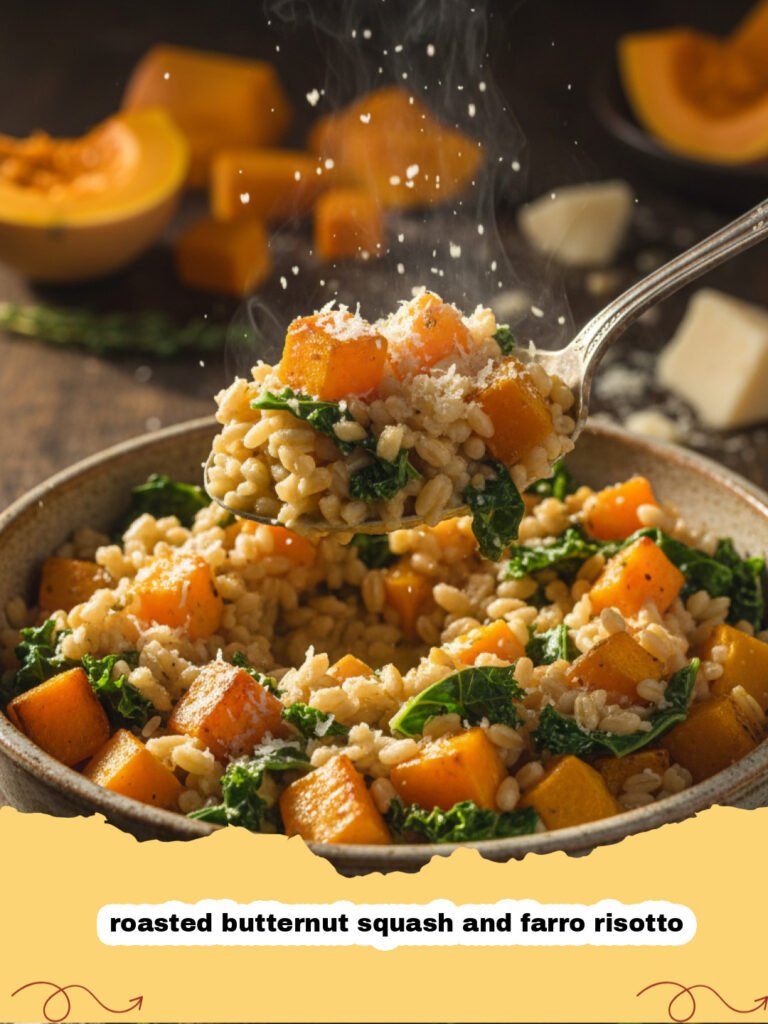
Roasted Butternut Squash and Farro Risotto
A nutty, wholesome, and incredibly creamy twist on the classic risotto using ancient grain farro and caramelized roasted butternut squash.
- Total Time: PT60M
- Yield: 4 servings 1x
Ingredients
1 small butternut squash, peeled and cubed into 1/2-inch pieces
2 tablespoons olive oil
1 teaspoon salt, divided
1/2 teaspoon black pepper
1.5 cups pearled farro
1 large shallot, minced
3 cloves garlic, minced
1/2 cup dry white wine
4-5 cups vegetable broth, kept warm
1/2 cup freshly grated Parmesan cheese
1 tablespoon fresh sage, chopped
1 tablespoon lemon juice
Optional: Toasted pepitas for garnish
Instructions
Step 1: Preheat your oven to 400°F (200°C). Toss the cubed butternut squash with olive oil, 1/2 teaspoon salt, and pepper on a large baking sheet. Roast for 25-30 minutes until tender and caramelized.
Step 2: In a large pot or Dutch oven, heat a splash of olive oil over medium heat. Add the shallots and cook for 3-4 minutes until translucent. Add the garlic and cook for another minute until fragrant.
Step 3: Add the farro to the pot and toast for 2-3 minutes, stirring constantly to ensure the grains are coated and smell nutty.
Step 4: Pour in the white wine to deglaze the pan. Use a wooden spoon to scrape any bits off the bottom. Let the wine simmer until it has mostly evaporated.
Step 5: Add the warm vegetable broth 1 cup at a time, stirring occasionally. Allow each addition to be mostly absorbed before adding the next. This process should take about 25-30 minutes until the farro is tender but still has a slight chew (al dente).
Step 6: Once the farro is cooked, stir in half of the roasted butternut squash. Use your spoon to gently mash some of the squash into the farro to create a creamy texture.
Step 7: Stir in the remaining whole squash cubes, Parmesan cheese, fresh sage, and lemon juice. Season with the remaining salt if needed.
Step 8: Serve the roasted butternut squash and farro risotto immediately, garnished with toasted pepitas or extra cheese if desired.
Notes
For a vegan version, swap Parmesan for nutritional yeast. Use semi-pearled farro for a shorter cook time.
- Prep Time: PT15M
- Cook Time: PT45M
- Category: Main Dishes & Savory Recipes
- Cuisine: Italian-Inspired American
Nutrition
- Serving Size: 1.5 cups
- Calories: 385
- Sugar: 6g
- Sodium: 540mg
- Fat: 11g
- Saturated Fat: 4g
- Unsaturated Fat: 6g
- Trans Fat: 0g
- Carbohydrates: 62g
- Fiber: 9g
- Protein: 12g
- Cholesterol: 15mg
Leave a Reply