
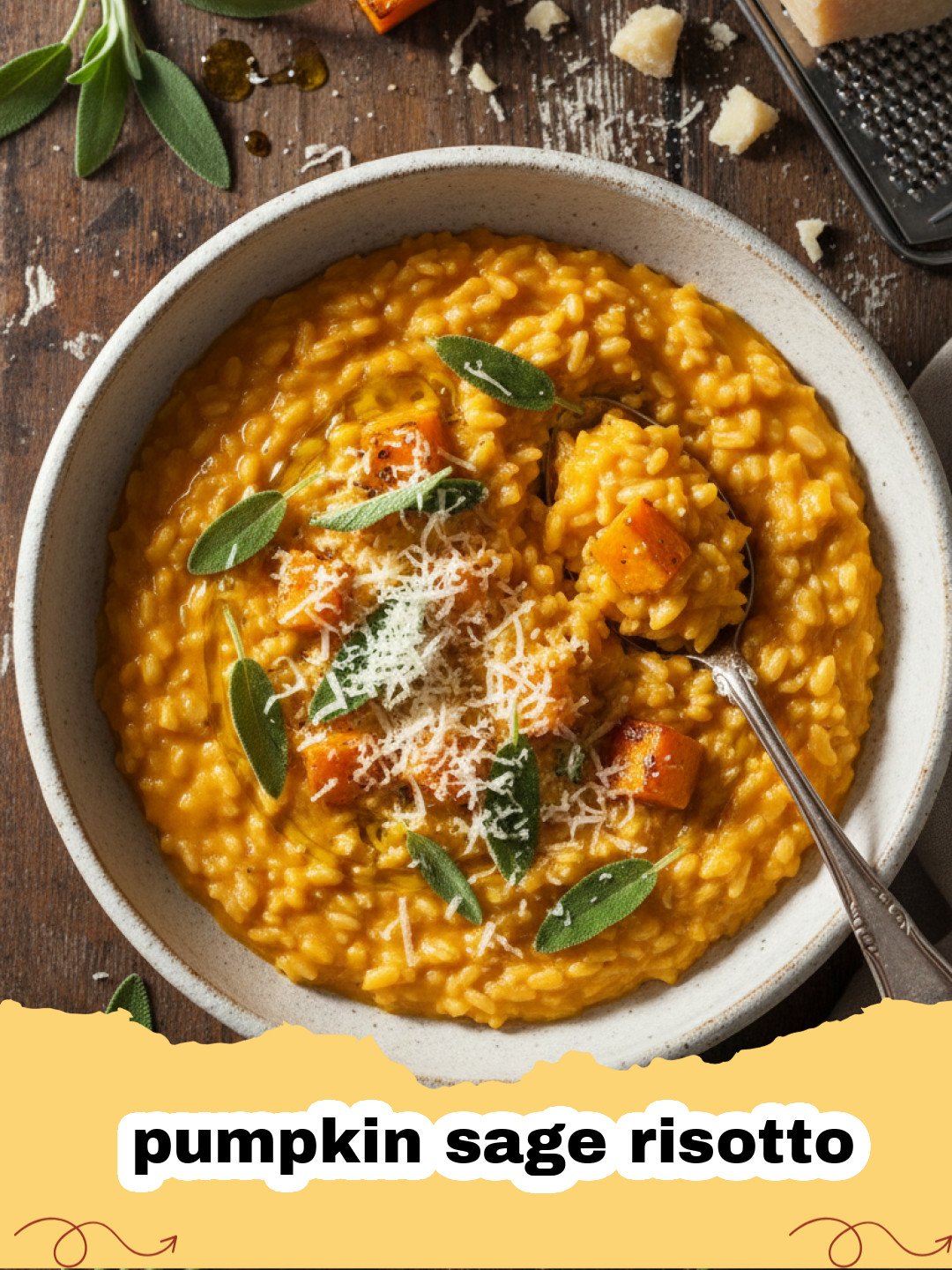
There is something truly magical about the way a bowl of pumpkin sage risotto can transform a chilly autumn evening into a cozy sanctuary of warmth and flavor. I remember the very first time I attempted to make pumpkin sage risotto in my tiny first apartment; the windows were fogged up from the steam of the simmering broth, and the earthy, woodsy scent of frying sage filled every corner of the room. It was a rhythmic, almost meditative process of stirring and pouring that forced me to slow down after a long day of work. Since then, pumpkin sage risotto has become my ultimate cold-weather tradition, a recipe that signals the arrival of sweater weather and golden leaves. This pumpkin sage risotto isn't just a meal; it is a labor of love that rewards you with the most velvet-like texture and a sophisticated balance of sweetness and savory depth. Whether you are cooking for a quiet night in or hosting a festive dinner party, this pumpkin sage risotto is guaranteed to be the star of the show.
Why This Recipe is a Must-Try
- Ultimate Creaminess: By using high-quality Arborio rice and the slow-addition method, this pumpkin sage risotto achieves a naturally luxurious texture without needing an excessive amount of heavy cream.
- Perfect Flavor Balance: The natural sweetness of the pumpkin puree is perfectly offset by the earthy, slightly peppery notes of fresh sage and the salty punch of Parmigiano-Reggiano.
- Seasonal Showstopper: This pumpkin sage risotto looks as beautiful as it tastes, featuring a vibrant orange hue that makes it the perfect centerpiece for any autumn-themed gathering or holiday table.
- Versatile and Adaptable: While this pumpkin sage risotto is incredible on its own, it serves as a wonderful base for various proteins like seared scallops, roasted chicken, or even crispy pancetta.
Key Ingredient Notes
To make the best pumpkin sage risotto possible, you need to pay close attention to the quality of your ingredients. The first and most important element is the rice. You must use a short-grain, high-starch rice like Arborio or Carnaroli. These varieties are essential for pumpkin sage risotto because they release their starch slowly as they cook, which is what creates that signature creamy sauce without the rice turning into mush. If you enjoy hearty seasonal meals, you might also like The Ultimate Hearty Pumpkin and White Bean Stew for another way to use this versatile gourd.
Next, let’s talk about the pumpkin. While you can certainly roast and puree your own sugar pumpkin, a high-quality canned pumpkin puree (not pumpkin pie filling!) works beautifully for pumpkin sage risotto and saves a significant amount of time. The puree blends seamlessly into the rice, providing a consistent color and flavor throughout the dish. Finally, do not skimp on the fresh sage. Dried sage simply does not have the same aromatic impact. Frying the fresh leaves in butter before starting the rice infuses the entire pumpkin sage risotto with a subtle, toasted herbal note that is absolutely indispensable. For another take on these classic fall flavors, you should try this Creamy Roasted Butternut Squash and Sage Pasta.
Step-by-Step Guide with Pro Tips
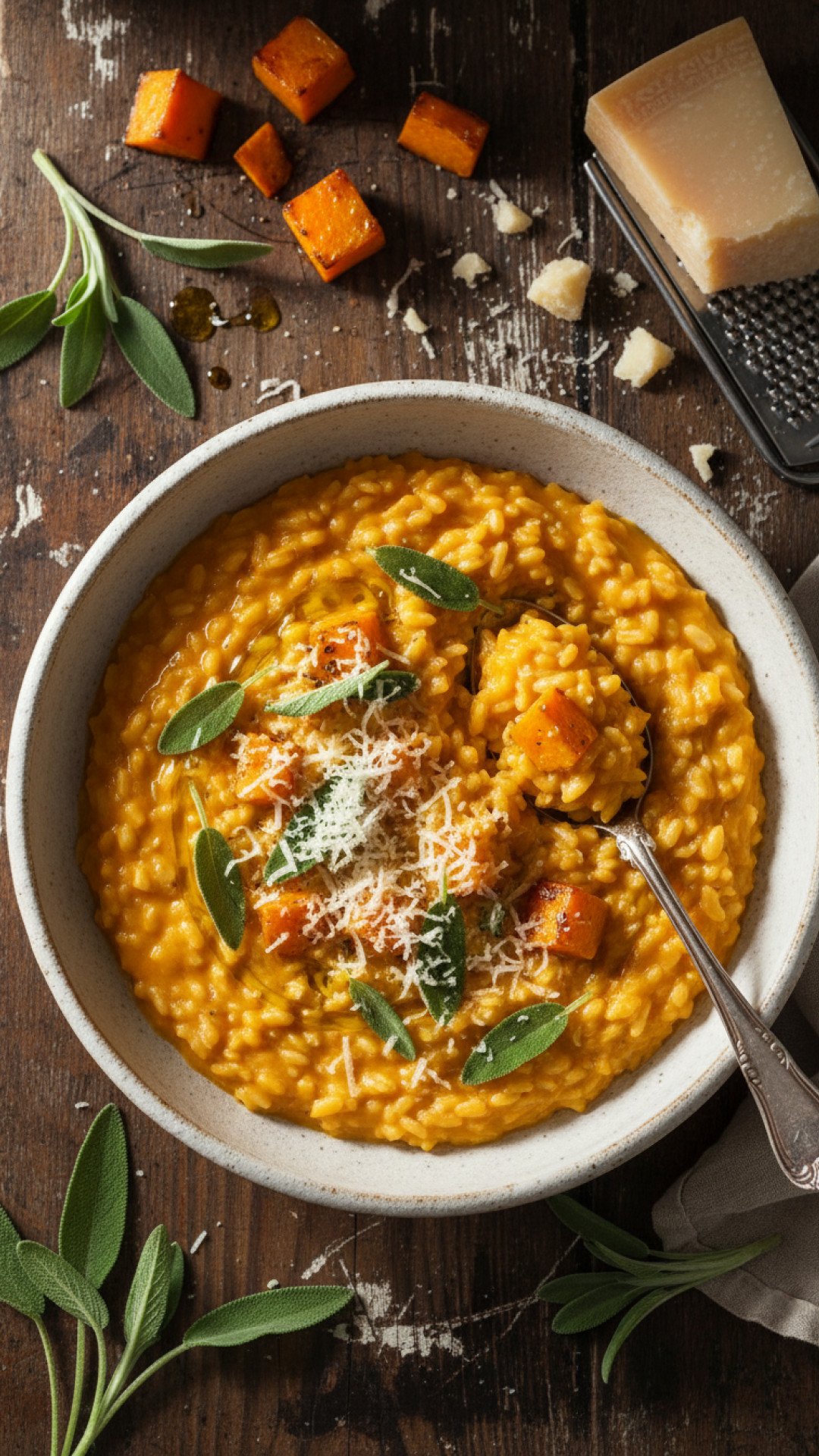
Making pumpkin sage risotto is often seen as an intimidating task, but it is actually quite simple if you follow a few basic principles. The most important rule of pumpkin sage risotto is to keep your broth warm. If you add cold broth to your hot rice, it shocks the grain and stops the cooking process, leading to an uneven texture. Keep a small saucepan of vegetable or chicken stock simmering on the burner next to your skillet throughout the entire process of making your pumpkin sage risotto.
The process begins by melting a generous knob of butter and frying your sage leaves until they are crisp. This not only provides a beautiful garnish but also flavors the fat that will coat every grain of rice in your pumpkin sage risotto. Once the leaves are removed, you will sauté finely diced shallots and garlic until translucent. Then comes the 'tostatura' phase: adding the rice to the pan and stirring it until the edges become translucent and it smells slightly nutty. This step is crucial for pumpkin sage risotto because it toasts the surface of the rice, helping it maintain its structural integrity during the long simmering process. Deglazing the pan with a dry white wine like Pinot Grigio adds a necessary acidity that cuts through the richness of the pumpkin sage risotto. Once the wine has evaporated, you begin the gradual addition of warm broth, one ladle at a time, stirring frequently. This agitation is what coaxes the starch out of the rice to create the creamy base of your pumpkin sage risotto.
Variations & Serving Suggestions
This pumpkin sage risotto is incredibly flexible. If you want to add a bit of crunch, consider topping the finished dish with toasted pepitas (pumpkin seeds) or chopped walnuts. For a more decadent pumpkin sage risotto, stir in a dollop of mascarpone or goat cheese right at the end instead of the traditional butter and parmesan. If you are serving this pumpkin sage risotto as a side dish, it pairs wonderfully with roasted pork tenderloin or a simple green salad with a tart vinaigrette. If you find yourself with leftovers of this delicious pumpkin sage risotto, you can even form them into small balls, bread them, and fry them to make autumn-inspired arancini. To keep your leftovers fresh for days, I highly recommend using a set of Basics Glass Food Storage containers, which are perfect for maintaining the quality of the rice.
Nutrition Information
| Nutrient | Amount per Serving |
|---|---|
| Calories | 410 kcal |
| Carbohydrate Content | 58g |
| Cholesterol Content | 25mg |
| Fat Content | 14g |
| Fiber Content | 4g |
| Protein Content | 9g |
| Saturated Fat Content | 8g |
| Serving Size | 1 bowl (approx 350g) |
| Sodium Content | 680mg |
| Sugar Content | 5g |
| Trans Fat Content | 0g |
| Unsaturated Fat Content | 4g |
Making pumpkin sage risotto is a rewarding culinary journey that results in the ultimate comfort food. The combination of creamy rice, sweet pumpkin, and aromatic sage creates a harmony of flavors that is truly unmatched during the autumn months. I hope this pumpkin sage risotto becomes as much of a staple in your home as it is in mine. Don't be afraid of the stirring—put on some music, pour yourself a glass of wine, and enjoy the process of creating this beautiful pumpkin sage risotto. Happy cooking!
FAQs
Can I use canned pumpkin for pumpkin sage risotto?
Yes, high-quality canned pumpkin puree works perfectly for pumpkin sage risotto. Just ensure it is 100% pure pumpkin and not pre-sweetened pumpkin pie filling.
What is the best rice for pumpkin sage risotto?
Arborio rice is the most common and accessible choice for pumpkin sage risotto. For an even creamier texture, you can use Carnaroli rice, which is often considered the 'king' of risotto rice.
How do I make my pumpkin sage risotto creamier?
The key to creaminess is the constant stirring and the gradual addition of warm broth. This process releases the starches from the rice. Adding a bit of butter and parmesan at the very end (the mantecatura) also creates a silky finish.
Can I make pumpkin sage risotto ahead of time?
Risotto is best served immediately. However, you can par-cook it by doing half the broth additions, then spreading it on a tray to cool. Finish the cooking process just before serving by adding the remaining broth.
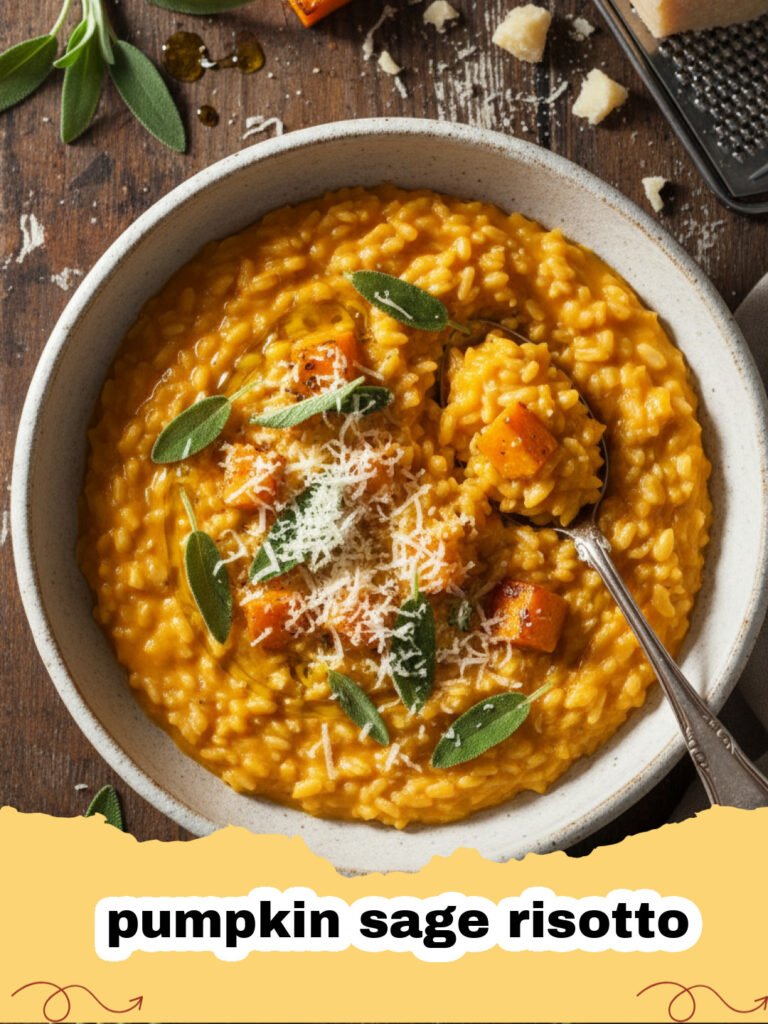
Pumpkin Sage Risotto
A luxuriously creamy and flavorful pumpkin sage risotto featuring Arborio rice, sweet pumpkin puree, and earthy fresh sage for the perfect autumn meal.
- Total Time: 45 minutes
- Yield: 4 servings 1x
Ingredients
1.5 cups Arborio rice
1 cup pumpkin puree (unsweetened)
4-5 cups vegetable or chicken broth, kept warm
1/2 cup dry white wine (Pinot Grigio or Sauvignon Blanc)
2 tablespoons unsalted butter
1 tablespoon olive oil
1 large shallot, finely minced
3 cloves garlic, minced
10-12 fresh sage leaves
1/2 cup freshly grated Parmigiano-Reggiano cheese
1/4 teaspoon ground nutmeg
Salt and freshly cracked black pepper to taste
Instructions
Step 1: In a medium saucepan, bring the broth to a low simmer and keep it warm over low heat throughout the cooking process.
Step 2: In a large skillet or Dutch oven, melt 1 tablespoon of butter with the olive oil over medium heat. Add the fresh sage leaves and fry for 1-2 minutes until crisp. Remove the sage leaves and set aside on a paper towel, leaving the infused oil/butter in the pan.
Step 3: Add the minced shallot to the pan and sauté for 2-3 minutes until soft and translucent. Add the garlic and cook for another 30 seconds until fragrant.
Step 4: Add the Arborio rice to the pan and stir constantly for 2 minutes to toast the grains. The edges of the rice should look translucent.
Step 5: Pour in the white wine and stir until the liquid has been fully absorbed by the rice.
Step 6: Add a ladleful (about 1/2 cup) of the warm broth to the rice. Stir frequently and wait until the liquid is almost completely absorbed before adding the next ladleful.
Step 7: Continue adding broth and stirring for about 15-18 minutes. When you are halfway through the broth, stir in the pumpkin puree and nutmeg to combine with the rice.
Step 8: Continue the broth process until the rice is tender but still has a slight bite (al dente). You may not need all of the broth.
Step 9: Remove the pan from the heat. Stir in the remaining 1 tablespoon of butter and the grated parmesan cheese. Season with salt and pepper to taste.
Step 10: Serve the pumpkin sage risotto immediately, garnished with the crispy fried sage leaves and extra cheese if desired.
Notes
Always use warm broth to ensure the rice cooks evenly and releases its starch properly.
- Prep Time: 10 minutes
- Cook Time: 35 minutes
- Category: Main Dishes & Savory Recipes
- Cuisine: Italian
Nutrition
- Serving Size: 1 bowl
- Calories: 410 kcal
- Sugar: 5g
- Sodium: 680mg
- Fat: 14g
- Saturated Fat: 8g
- Unsaturated Fat: 4g
- Trans Fat: 0g
- Carbohydrates: 58g
- Fiber: 4g
- Protein: 9g
- Cholesterol: 25mg
Leave a Reply