Ingredients
5 lbs (approx. 2.2 kg) green cabbage, fresh and firm
3-4 tablespoons non-iodized sea salt or pickling salt
Optional: 1 cup filtered water (if needed for brine)
Instructions
Step 1: Prepare Your Cabbage. Remove any bruised or damaged outer leaves. Wash the cabbage thoroughly. Quarter the cabbage and remove the core. Using a sharp knife or mandoline, thinly slice the cabbage into fine shreds.
Step 2: Salt the Cabbage. Place the shredded cabbage in a large mixing bowl. Sprinkle 3-4 tablespoons of non-iodized salt evenly over the cabbage. Begin to massage the salt vigorously into the cabbage with clean hands for 5-10 minutes, or until the cabbage starts to release liquid and looks watery at the bottom of the bowl.
Step 3: Pack the Cabbage. Transfer the massaged cabbage into your clean fermentation vessel (e.g., a 2-quart glass jar). Pack it down tightly, layer by layer, pressing firmly to eliminate air pockets and ensure the cabbage is submerged under its own liquid. If necessary, add a small amount of filtered water to fully cover the cabbage.
Step 4: Add a Weight and Seal. Place a fermentation weight or a smaller, clean jar filled with water on top of the packed cabbage to keep it fully submerged beneath the brine. Cover the fermentation vessel loosely with a lid, an airlock system, or a cloth secured with a rubber band to allow gases to escape.
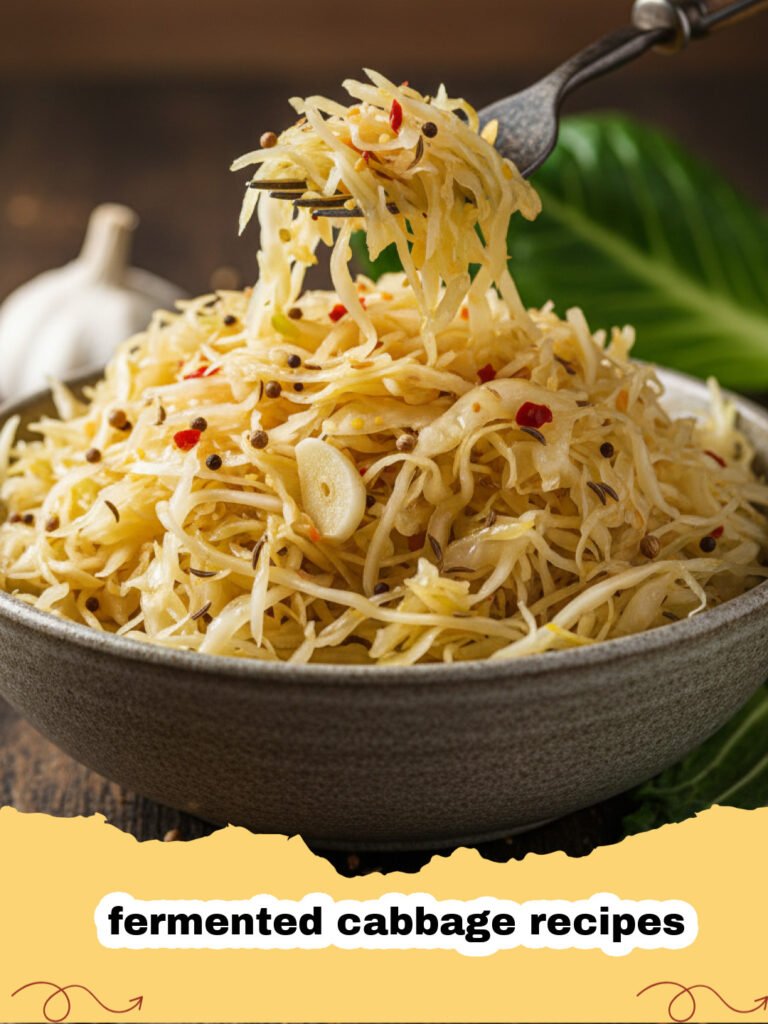
Step 5: Ferment. Place the vessel in a cool, dark place (ideally 60-75°F / 15-24°C) to ferment. Check daily to ensure the cabbage remains submerged. Ferment for 1 to 4 weeks, tasting periodically after about 7 days until it reaches your desired level of tanginess. Skim off any kahm yeast (white film) if it appears. Once fermented to your liking, seal the jar tightly and store in the refrigerator, where it will last for several months.
Notes
Always use clean equipment to prevent contamination. The ideal fermentation temperature is crucial for the best results. Taste your ferment regularly to achieve your preferred level of sourness. If any mold other than white kahm yeast appears, discard the batch.
- Prep Time: 30 minutes
- Cook Time: 1-4 weeks (fermentation)
- Category: Main Dishes & Savory Recipes
- Cuisine: European
Nutrition
- Serving Size: 1/2 cup (70g)
- Calories: 25 kcal
- Sugar: 2.5 g
- Sodium: 300 mg
- Fat: 0.1 g
- Saturated Fat: 0 g
- Unsaturated Fat: 0.1 g
- Trans Fat: 0 g
- Carbohydrates: 6 g
- Fiber: 3 g
- Protein: 1.3 g
- Cholesterol: 0 mg